
Polyester satin is common in modern sleepwear, but it is often described so vaguely that shoppers are left comparing shine rather than understanding the fabric. A glossy surface does not make a garment silk, and an honest product page should tell you exactly what you are buying.
This guide explains what polyester satin does well, where its limitations are and how to care for it so you can make a practical choice.
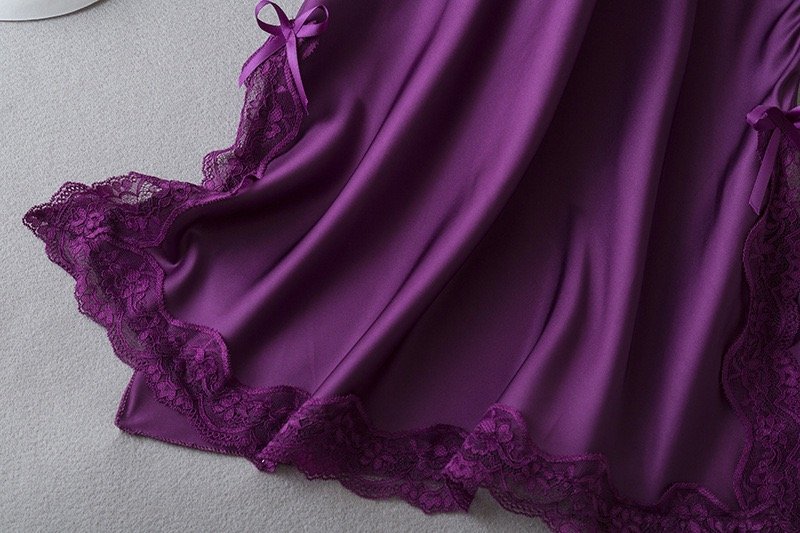
What is polyester satin?
Polyester is the fibre. Satin describes the weave structure that creates a smooth face and a more muted reverse. The two words answer different questions: what the material is made from and how it is constructed.
Silk can be woven into satin, but most accessible satin sleepwear is made from polyester. That is why “silky” should be understood as a description of touch, not proof of silk content. Check the composition line rather than relying on the photography or product name.
Why brands use polyester satin
It creates a fluid visual finish
The smooth face reflects light and gives nightdresses, camisoles and robes a distinctive sheen. In a well-cut garment, this surface can emphasise folds, drape and movement.
It holds colour well
Polyester can produce saturated shades such as burgundy, black, jewel blue and smoky lilac, as well as soft neutrals. Colour still varies between screens and lighting conditions, so real product video and detail photographs remain useful.
It is generally easier to access
Polyester satin usually costs less than silk satin, allowing more room for colour, lace and silhouette choices at a lower first-purchase price. Price alone does not determine quality; cut, finishing, fabric weight and construction still matter.
It can be relatively crease-resistant
Compared with some natural fibres, polyester often recovers from light creasing more readily. It can still arrive folded or develop pressure marks, so gentle steaming or a cool iron on the reverse may be needed if the care label permits it.
The limitations to understand
Breathability varies
Polyester does not behave like a natural fibre. Some lightweight woven satins feel comfortable in a cool room, while denser versions may retain more warmth. The garment’s looseness, coverage and the room temperature all influence the result.
It may have little stretch
Many woven satin garments have limited give unless elastane is listed. A design that looks fluid can still feel restrictive if there is not enough room through the bust or hips. Use the product measurements rather than assuming the fabric will stretch around the body.
Surface snags need care
Rough jewellery, zips, hooks and textured surfaces can pull satin threads. Lace trims also benefit from separation from heavier laundry.
Not all shine looks the same
Fabric weight and finishing affect whether the sheen appears soft and controlled or bright and plastic. Look for close-up images, natural-light video and clear garment construction rather than judging from a heavily edited hero image.
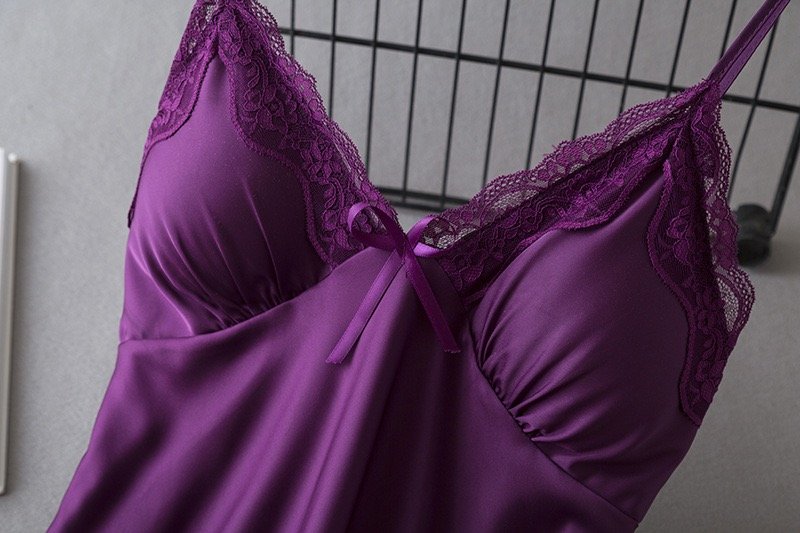
How to assess polyester satin before buying
- Read the full composition: avoid listings that use only “silk feel” or “satin” without naming the fibre.
- Check the cut: a loose shape and a fitted bias-inspired shape will feel different in the same material.
- Review measurements: prioritise bust and hip room in woven styles with little stretch.
- Inspect detail media: look at seams, lace joins, straps, back construction and the fabric under more than one light.
- Read the care instructions: delicate trims may require a laundry bag or hand washing even when the base fabric is washable.
- Consider the season: lighter, shorter silhouettes may be more comfortable in warm rooms; robes and sets add flexibility in cooler weather.
How to care for it
- Check the garment label first; item-specific instructions take priority.
- Use cool water and a gentle cycle where machine washing is permitted.
- Place lace-trimmed pieces in a mesh laundry bag.
- Wash with similar lightweight colours and keep hooks or rough hardware separate.
- Avoid bleach and high heat.
- Reshape gently and air dry where possible.
- Use low heat from the reverse or a steamer at a safe distance if the label allows.
Is polyester satin worth buying?
It can be a sensible choice when you want sheen, colour and fluid styling at an accessible price and you are comfortable with the fibre’s limitations. It is not a substitute for silk, and it should not be sold as one. The strongest purchase decision comes from accurate composition, good fit information, real detail media and a design you will genuinely wear.
For the broader distinction between fibre and weave, read Silk vs Satin Sleepwear.
Frequently asked questions
Is polyester satin real satin?
Yes. Satin is a weave, not a fibre. Polyester can be woven in a satin structure, but it should still be identified as polyester rather than silk.
Does polyester satin stretch?
Many woven polyester satins have little natural stretch. Check whether elastane is included and use the published garment measurements.
Can polyester satin be machine washed?
Some pieces can be washed on a cool gentle cycle, but lace, hardware and finishing may change the required care. Follow the label for the exact item.
Is polyester satin hot to sleep in?
It depends on the weight and weave. Lightweight woven satin can feel comfortable in a cool room, while denser versions retain more warmth. Looseness, coverage and room temperature matter as much as the fibre, so choose a lighter, shorter silhouette for warmer nights.
How do I stop polyester satin from snagging?
Keep it away from rough jewellery, zips and hooks, and wash lace-trimmed pieces inside a mesh laundry bag. Store satin folded rather than hung, and handle the fabric gently when putting it on or taking it off.
See the fabric in different silhouettes: explore our Slips and Sets.
4 Responses