
Choosing between a nightdress and pyjamas is less about following a rule and more about noticing what helps you feel comfortable at home. Some evenings call for the easy movement of a softly draped nightdress; others feel better with the familiar coverage of a matching pyjama set.
This guide compares both options by movement, warmth, coverage and everyday use, so you can choose sleepwear that fits the way you actually spend your evenings.
The short answer
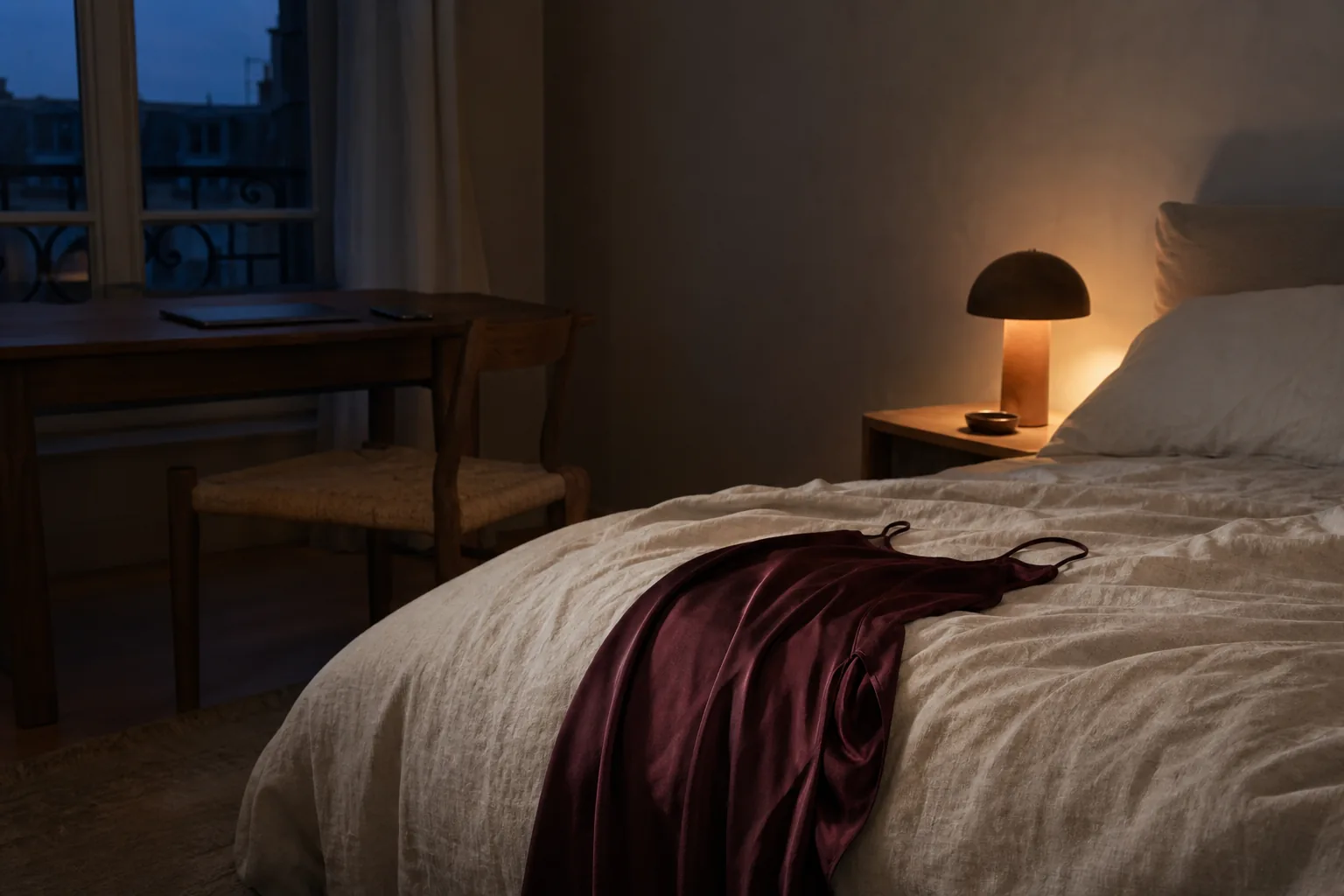
Choose a nightdress if you prefer fewer layers, unrestricted movement around the waist and a silhouette that falls freely over the body. Choose pyjamas if you value more coverage, separate pieces and a secure feeling when moving between the bedroom and the rest of the home.
Neither is automatically more comfortable. Fabric, cut, seams, fit and room temperature often matter more than the category printed on the label.
1. Freedom of movement
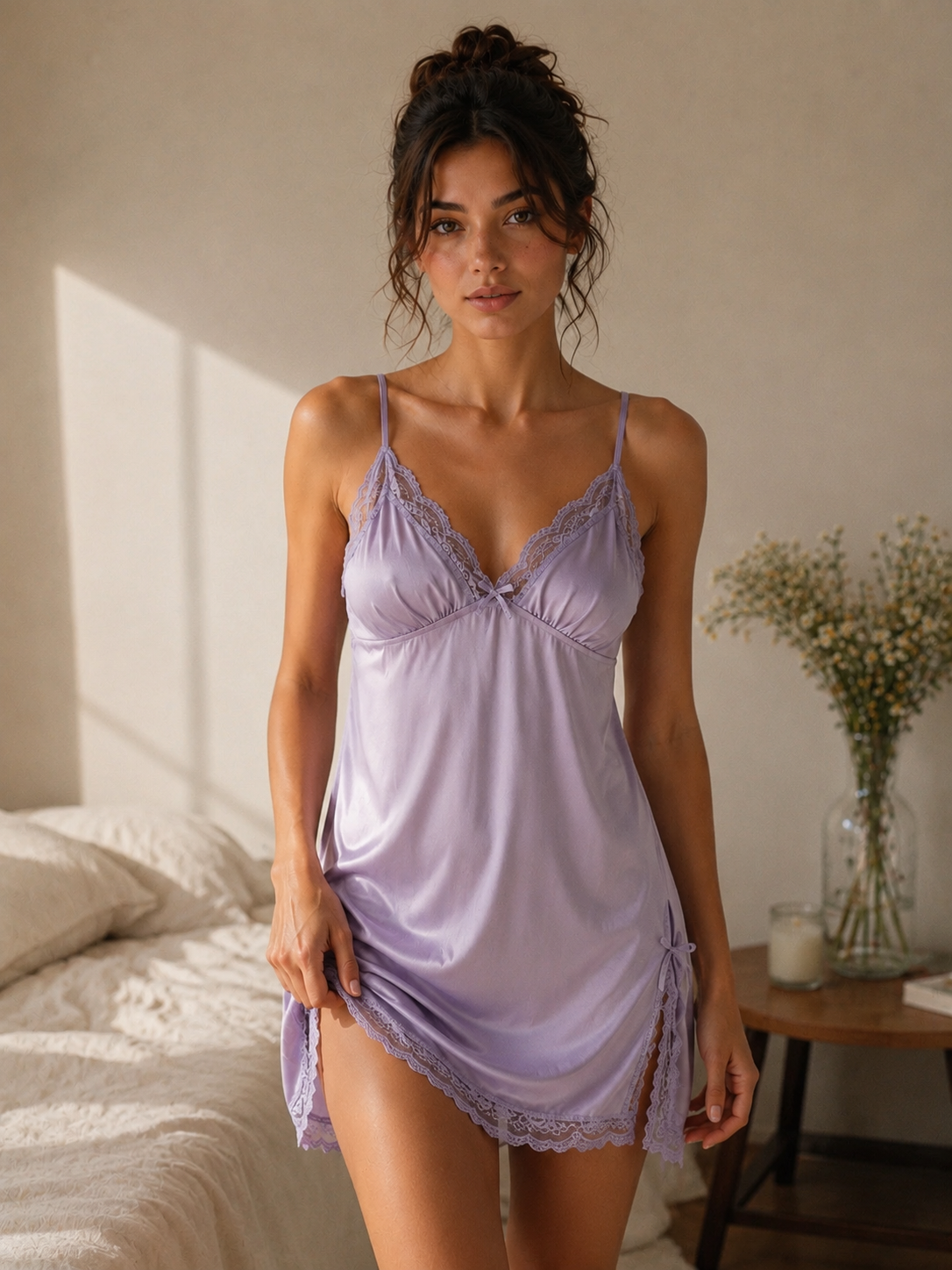
A nightdress has no waistband and fewer points of contact with the body. That can make it appealing if you dislike elastic at the waist or prefer fabric that moves as one continuous piece. A bias-inspired or softly cut slip can follow the body without feeling structured.
Pyjamas offer a different kind of freedom. A well-cut top and shorts or trousers stay separate, making them practical for curling up on the sofa, stretching, preparing tea or moving through a shared home. If you toss and turn, however, a loose top may ride up, while a longer nightdress can twist. Personal movement habits matter.
If a fluid silhouette sounds right for you, browse our satin slips and nightdresses. If you prefer separates, explore our sleepwear sets.
2. Warmth and temperature
For warmer rooms, a short nightdress usually creates less coverage and allows more air around the legs. A camisole-and-shorts set can offer a similar lightweight feel while giving you two separate pieces.
In cooler weather, long-sleeved pyjamas and full-length trousers naturally provide more coverage. A robe can also extend the use of a lighter nightdress, letting you add a layer during the evening and remove it when you are ready for bed.
Rather than assigning one style to an entire season, consider your bedroom temperature, bedding and whether you tend to feel warm or cool at night.
3. Coverage and the feeling of ease
Comfort is not only physical. It also includes how relaxed and self-assured you feel in what you are wearing.
A nightdress can feel beautifully simple: one piece, no styling decisions and a soft line through the body. Pyjamas may feel more secure if you share your home, answer the door, travel with friends or prefer sleepwear that resembles relaxed daywear.
Coverage does not determine femininity, and less fabric does not automatically mean more confidence. The best choice is the one that lets you stop adjusting your clothes and return your attention to your evening.
4. Fabric and construction matter
Two nightdresses can feel completely different, just as two pyjama sets can. Look beyond the product name and check the details:
- Straps: adjustable straps help refine the position of a slip or camisole.
- Waistbands: elastic should feel secure without digging in.
- Seams: flatter, neatly finished seams are less noticeable against the skin.
- Lace placement: lace can add texture and detail, but should sit comfortably in areas that move.
- Fabric composition: check the product page rather than assuming every glossy fabric is silk. NOIR ROUGE lists item-specific composition under Fabric & Care.
- Fit: if you prefer a relaxed feeling or sit between sizes, review the published measurements and fit notes before choosing.
5. Which style suits your evening?
Choose a nightdress when you want:
- a single, uncomplicated layer;
- no waistband around the middle;
- a fluid silhouette for slow evenings;
- something that can be paired easily with a robe.
Choose pyjamas when you want:
- more coverage through the legs or upper body;
- separates that work around the whole home;
- the flexibility to mix sizes or styles where available;
- a familiar, relaxed shape for travel or shared spaces.
Consider owning both when:
Your needs change with the weather, your plans and your mood. A small sleepwear wardrobe can be more useful than searching for one piece that must do everything. A light nightdress may suit warm, private evenings, while a set may be the piece you reach for on cooler nights or unhurried weekend mornings.
A simple way to decide
Before choosing, ask yourself four questions:
- Do I notice or dislike waistbands when resting?
- Would I feel better with more coverage outside the bedroom?
- Is my room usually warm, cool or changeable?
- Do I want one effortless piece or flexible separates?
Your answers will usually point more clearly towards a nightdress, a set or a place for both.
Make changing clothes part of the transition
Whichever style you choose, changing out of work clothes can become a small boundary between the demands of the day and the time that belongs to you. It does not need to be elaborate. Put away the laptop, soften the lighting, choose something comfortable and let the evening begin.
For more ideas, read our evening reset routine.
Frequently asked questions
Are nightdresses cooler than pyjamas?
They often provide less coverage, but fabric weight, length, room temperature and bedding all affect how warm a garment feels.
Are pyjamas better for lounging?
Many people like the coverage and separation of pyjamas for moving around the home. A nightdress can be equally suitable when paired with a robe or when you prefer a single flowing layer.
Should sleepwear fit loosely?
Sleepwear should allow comfortable movement without needing constant adjustment. Check each product’s measurements and fit notes, as sizing can differ between designs.
Is satin the same as silk?
No. Satin describes a weave and surface finish, while silk is a fibre. Always check the listed composition. NOIR ROUGE products use item-specific fabric descriptions and do not label polyester satin as silk.
Ready to compare? Explore Slips or shop Sets and choose the shape that feels right for your evenings.
One Response